







Recombinant antibody production
At RD-Biotech, we specialize in producing high-quality recombinant antibodies with extremely low endotoxin levels.
Using our optimized CHO- and HEK-cell expression platforms, we can produce quantities ranging from a few milligrams to several grams across a broad range of antibody formats, based on your sequences of interest. With our Fast-Track production service, delivery is possible in as little as four weeks.
The benefits of recombinant antibodies
Produced from defined genetic sequences, recombinant antibodies ensure reproducibility and specificity while allowing genetic modifications tailored to advanced scientific and therapeutic applications.
Recombinant antibodies offer significant benefits. Unlike hybridoma-derived antibodies, they are produced through an animal-free process in a chemically and biologically defined environment.
Because they are produced from a defined genetic sequence, they provide optimal batch-to-batch reproducibility and ensure the long-term availability of scientific reagents. Selection and molecular engineering can generate antibodies with high affinity and specificity for their target, thereby reducing cross-reactivity.
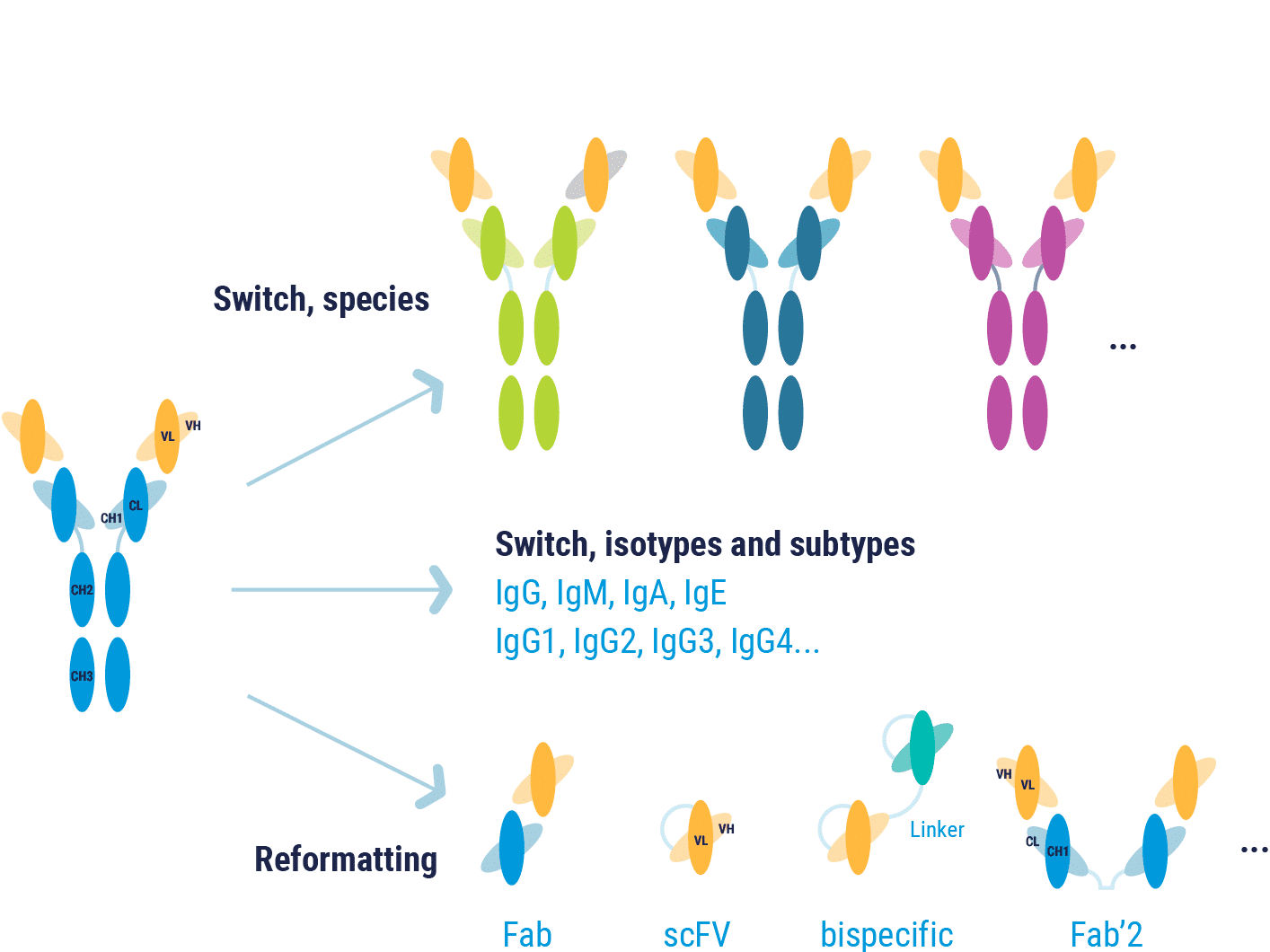
Recombinant antibodies can also be easily modified through genetic engineering. This makes it possible to:
- Change the antibody isotype
- Add tags or labels
- Improve affinity and stability
- Humanize antibodies for therapeutic applications
A wide range of recombinant antibody formats
Discover our diverse antibody formats, including chimeric, bispecific, afucosylated and humanized recombinant antibodies, antibody fragments and protein fusions.
Humanized antibodies now account for the majority of therapeutic antibodies approved for use.
A parental antibody is humanized using a modernized version of the CDR-grafting method developed by Winter et al. at the Medical Research Council in Cambridge, UK.
This approach involves inserting the complementarity-determining regions (CDRs)of a parental antibody, usually murine, into a human antibody framework. It preserves antigen specificity and affinity while reducing immunogenicity in humans.
Following humanization, sequence optimization can be offered, with optional supplementary molecular-modelling analyses. The objectives are to:
- Improve manufacturability by reducing heterogeneity
- Increase antibody affinity and biological activity, including IC₅₀ performance
RD-Biotech also applies its expertise to the development and production of recombinant proteins.
These proteins can be fused to an Fc domain to optimize their performance according to the specific requirements of your project.
Recombinant antibody production process
From variable-fragment synthesis to the production of a purified, quality-controlled antibody, we provide a complete, flexible process with a standard turnaround time of five to six weeks.
- Optional step: sequencing of the monoclonal antibody’s heavy and light chains
- Step 1: gene synthesis of the VH and VL variable fragments
- Step 2: cloning of the fragments into the expression vector
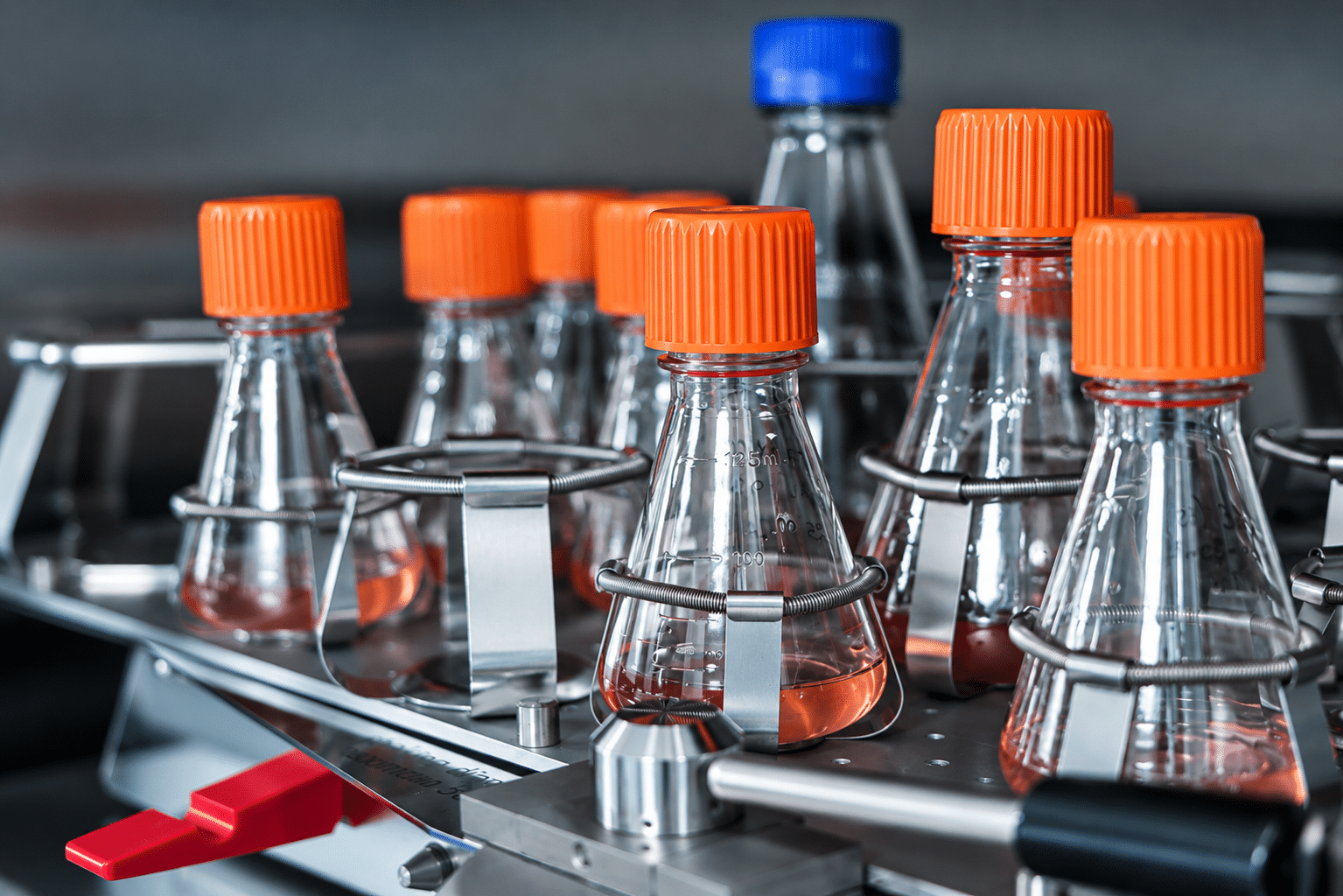
- Step 3: antibody expression by transient transfection
- Step 4: production monitoring using our FastELISA kits
- Step 5: chromatographic purification
- Step 6: quality-control testing:
- Purity testing by SDS-PAGE under reducing and non-reducing conditions
- Total-protein quantification by absorbance measurement using a spectrophotometer
- Optional additional testing, including SEC, LAL assays, Western blotting, ELISA, mass spectrometry and CE-SDS
- Step 7: packaging and shipping, accompanied by a production report
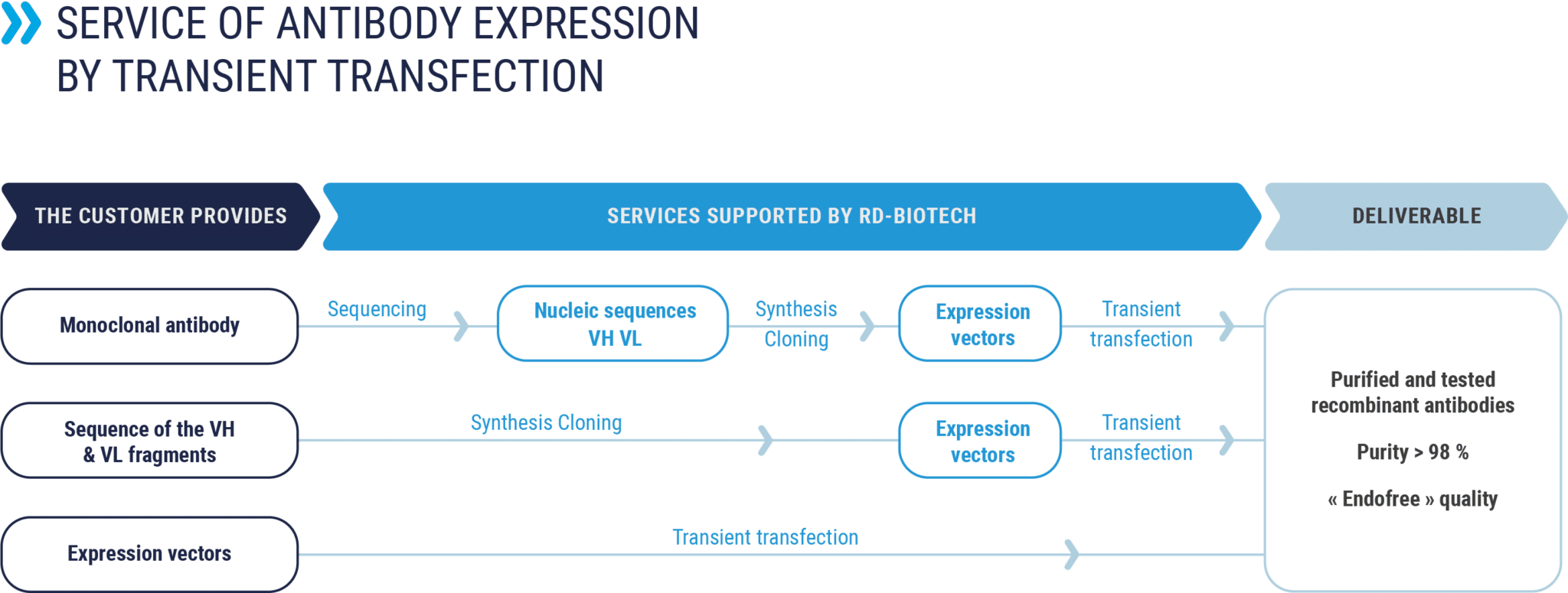
What are the turnaround times?
- Two to three weeks for VH and VL variable-fragment synthesis and subcloning into the expression vector—steps 1 and 2
- Three weeks for antibody production, purification and quality-control testing—steps 3 to 6
- Five to six weeks for the complete process, from gene synthesis to purified, quality-controlled antibodies
Is time a critical factor in your project? Do you need your pilot batches sooner?
Our Fast-Track production service enables you to receive your antibody batches in only four weeks.
We produce recombinant antibodies from either a stable cell line or a stable cell pool, supplied by the customer or developed by RD-Biotech.
Widely used in biotechnology, this approach enables the production of large antibody quantities (up to several grams) while ensuring consistent, reproducible expression.
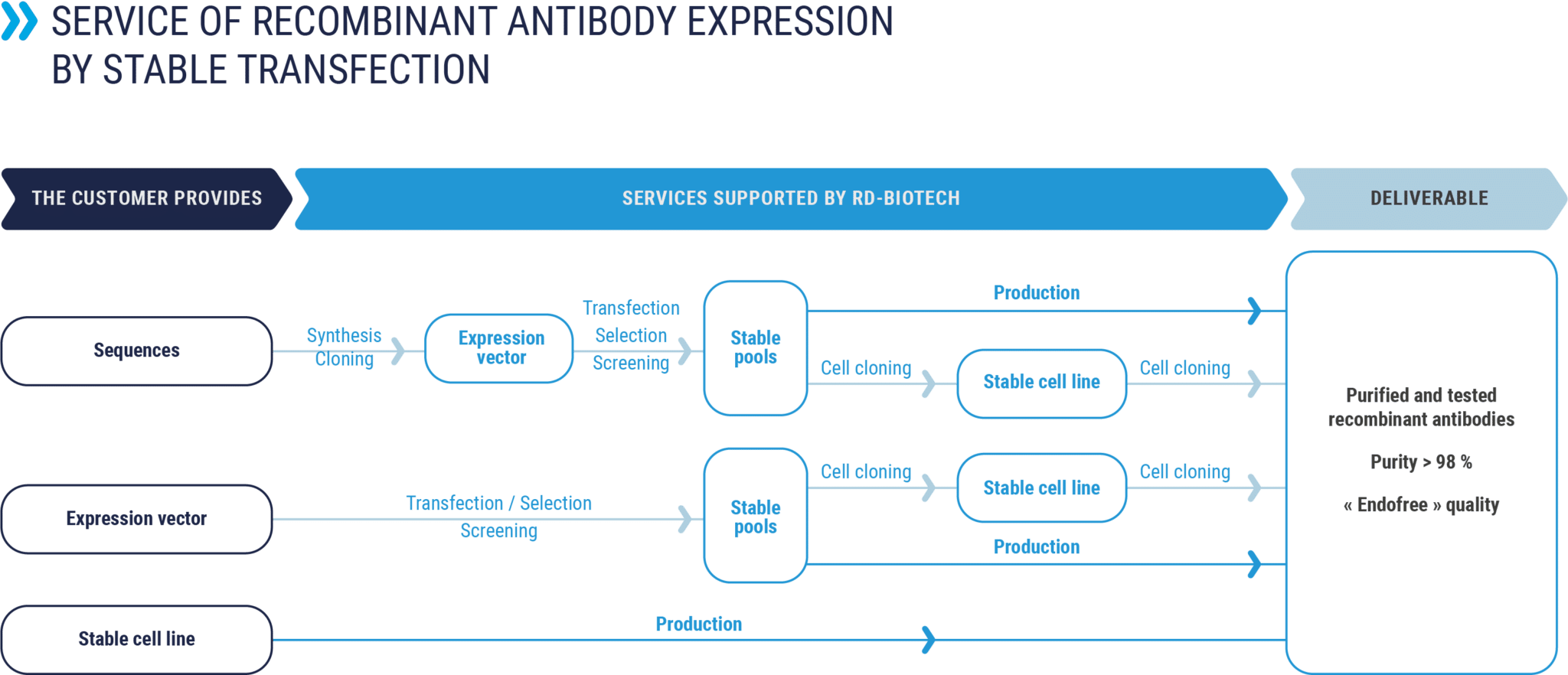
Recombinant antibody reformatting
Recombinant antibody reformatting is a key process in biotechnology and therapeutic research. It involves modifying the structure or format of an antibody to adapt it to specific requirements.
RD-Biotech provides a comprehensive antibody-reformatting service covering a broad range of formats and modifications:
- scFv
- Diabodies
- Fab fragments
- Bispecific antibodies
- Humanization
- Isotype or subclass switching